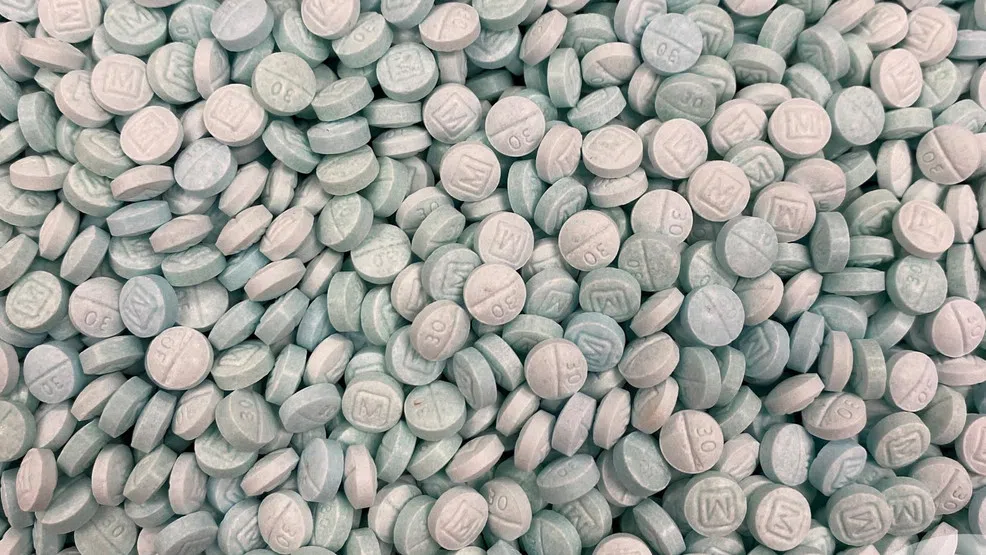
Seized fentanyl from the Lake Winnebago Area Metropolitan Enforcement Group's Drug Unit Dec. 8, 2022. PC: Fox 11 Online
GREEN BAY, WI (WTAQ-WLUK) – Back in September, the state Department of Health Services issued a public health advisory about the increase of fentanyl-related overdose deaths.
“You were to protect your son. You talked about you were his favorite person in the world, you should have protected him,” said Brown County Judge Tammy Jo Hock, as she scolded Tyana Putzlocker back in November when she sentenced her to ten years in prison in connection with the death of her son, Derrick.
The 18-month old died from a fentanyl overdose.
Hock said, “You were the one who knew you were not supposed to have these children in your care and look what happened as a a result of your neglectful behavior. Coupled with this kind of deceit, it’s simply so horrifying.”
According to the Wisconsin Department of Health Services, cases like this are not uncommon.
Since 2014, there have been 20 opioid related deaths involving children under the age of two.
The death of Brooke Seal’s daughter, in Outagamie County, is just the latest.
“Every death in this population is super alarming because it’s preventable. It’s normally due to some unfortunate circumstance within their living situation whether it be a parent or caregiver that is using substances in their presence,” said DHS Policy Director Paul Krupski.
A synthetic opioid, fentanyl is 50 times stronger than heroine and a hundred times more potent than morphine. Just 2 milligrams can be fatal for an adult.
“A very small amount of, specifically fentanyl is very capable of causing an overdose and a death so it does not necessarily need to be a pill another illicit substance that has fentanyl present in it as well. It could be something much less than that,” said Krupski.
While we know, in the Putzlocker case, the toddler ingested fentanyl while his parents were napping, it remains unclear how Brooke Seal’s two year old daughter got her hands on the fatal dose of the drug.
DHS officials encouraging those struggling with addiction to seek help to keep everyone in their homes safe.
Krupski added, “What we’re just really trying to make sure that people are aware of is that there is help that is available. There’s help and there’s resources that individuals can find if they’re struggling with substance use and really encouraging folks to reach out, get those referrals and find whatever support they need for whatever stage that they’re at.”
Help is available for those struggling with substance abuse at the Wisconsin Addiction Recovery Helpline.




Comments