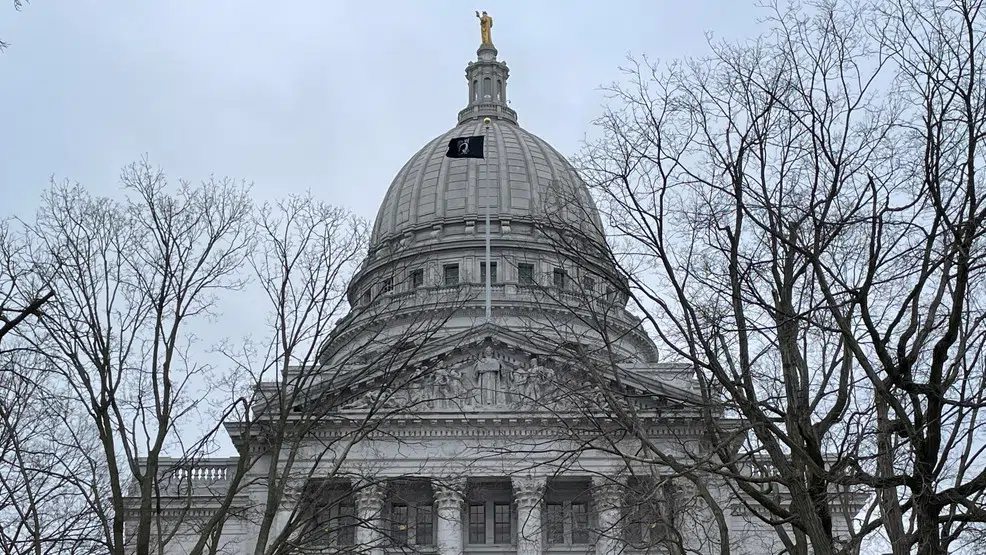
The exterior dome of the Wisconsin state Capitol is seen in Madison Feb. 15, 2023. PC: Fox 11 Online
WASHINGTON (WTAQ-WLUK) — Three of Wisconsin’s representatives in Congress are refusing their salaries during the government shutdown.
While most federal workers are furloughed and sent home during a shutdown, millions of essential federal employees and active-duty service members across the United States are still required to work. The catch is, these employees will not receive a paycheck until after the shutdown ends.
However, members of Congress are ensured pay during government shutdowns because theirs is protected under Article I, Section 6 of the Constitution.
Democratic Wisconsin Senator Tammy Baldwin and Republican Representatives Tony Wied, 8th District, and Glenn Grothman, 6th District, are among a growing number of Congressional leaders asking for their pay to be withheld until the shutdown is over.
Sen. Tammy Baldwin (D)
In a statement a representative for Baldwin said:
Senator Baldwin will not accept her pay during the shutdown and asked the Financial Clerk to hold her pay until the government shutdown ends.
Rep. Tony Wied, R-8th District
In a social media post, Wied said:
If Democrats want to shut down the government and stop paychecks for federal workers and service members, then Members of Congress shouldn’t get paid either.
That’s why I’m requesting that my salary be withheld until this unnecessary shutdown is over.
Rep. Glenn Grothman, R-6th District
Grothman said in a social media post:
I’ve asked that my pay be withheld during the shutdown. Why? Because if Democrats can’t do their job and keep the government open, no member of Congress deserves a paycheck.
This shutdown was 100% avoidable. Republicans passed a clean CR to keep the lights on, while Democrats chose politics over the American people. Meanwhile, many of our essential workers, trying to provide for their families, are left without pay. That’s unacceptable.
The annual salary for nearly all U.S. senators and representatives is about $174,000 a year. Lawmakers in top leadership posts receive more.




Comments