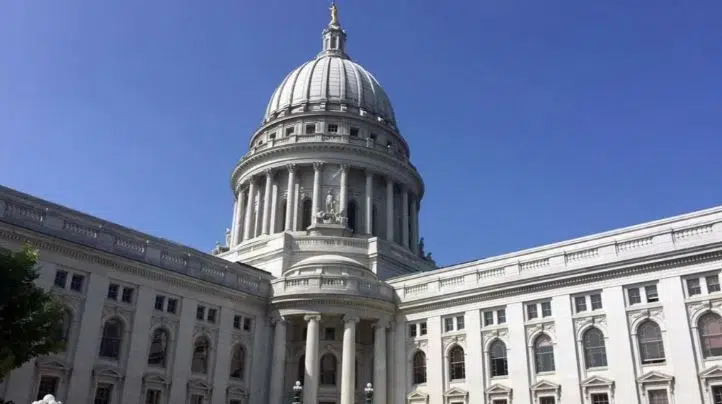
The Wisconsin State Capitol dome in Madison. PC: Fox 11 Online
MADISON, WI (WTAQ-WLUK) — Wisconsin’s next state budget crossed the finish line early Thursday morning in a race to beat Congress and secure federal dollars for Medicaid.
Governor Tony Evers signed the $111 billion biennial budget into law around 1:30 a.m.
He proclaimed 2025 the “Year of the Kid” and said he’s proud to see a bipartisan budget that reflects an emphasis on children and students.
“The work that our staff did and the people on the other side, it’s hard work and we accomplished lots of things. We didn’t accomplish everything we want, but you know what? That’s the way it works,” Evers said.
“I think there were a lot of wins in a way that allowed us to have our principles, but also get Governor Evers some of the things he thought was important,” Assembly Speaker State Rep. Robin Vos, R-Rochester, said.
The signing of the state budget came a few days after its constitutional deadline of June 30.
However, the State Legislature was under the gun for a different reason. They needed to get it passed before President Donald Trump’s “One Big Beautiful Bill” gained final approval in the House of Representatives Thursday afternoon in order to secure more than $1 billion in federal funding for Wisconsin’s Medicaid program.
“If the federal government got done with their bill first, we wouldn’t be eligible [for funding],” State Senator Eric Wimberger, R-Oconto, said. “We’re talking really a billion and a half, billion two. So, a substantial amount of money that was at stake if we didn’t sign it in time.”
“Pregnant women, children, people with disabilities. It would have been a tragedy to let that funding fall by the wayside,” State Sen. Jamie Wall, D-Green Bay, said.
The big win for Republicans in the budget was a push for $1.4 billion in tax cuts for retirees and the working class — something Evers vetoed in past budgets.
“This is our third budget now where Tony Evers was not interested in tax cuts, so without a negotiated deal, I bet he would have line-item vetoed those tax cuts again,” Wimberger said.
On the Democratic side, their biggest win was securing $330 million in funding for child care — replacing the COVID-era Child Care Counts program.
Wall said the biggest letdown was a lack of funding for public schools, despite getting more reimbursement money for special education.
“I think we should have done better for our school kids, and we’re gonna see some consequences from that in terms of school funding and probably districts turning to referendums,” Wall said.
The budget also included the biggest budget increase for the Universities of Wisconsin system in 20 years.




Comments