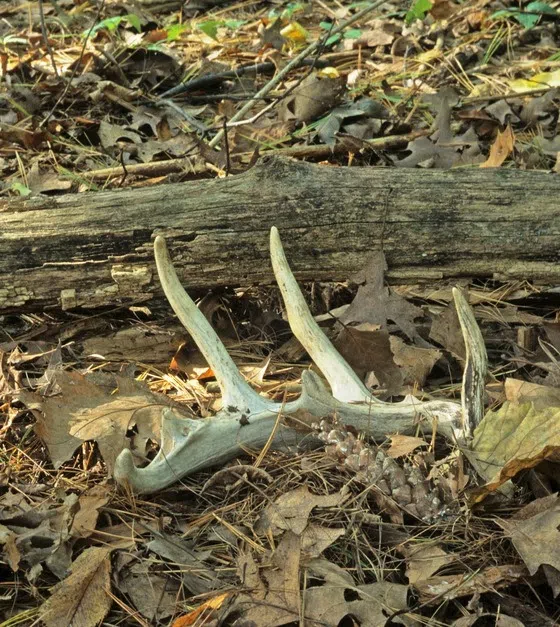
(DNR) – Whitetail country enters one of its most revealing phases in early spring. Searching for antler sheds offers more than the chance to pick up bone – a hike in the woods is beneficial exercise and an opportunity to scout deer signs from the fall.
Why Spring Is Prime Time
Bucks typically shed their antlers between late winter and early spring, depending on age, genetics, nutrition and stress. By the time snow recedes, antlers are often lying exposed in feeding areas, bedding cover and travel corridors. At the same time, the fall’s signs – rubs, scrapes, trails and beds – have not been erased by green growth. That leaves a clear snapshot of how deer used the property when it mattered most.
Spring scouting also comes with minimal risk. With the hunting season long over, there’s no concern about pressuring deer or altering their fall behavior. You can walk freely, cover ground thoroughly and take notes that will pay off months later.
Where To Find Shed Antlers
Shed antler locations are rarely random. Bucks tend to drop them where they spend the most time during late winter, especially in areas that combine food, cover and security. Key places to focus include:
- Late-season food sources such as standing corn, food plots, oak flats with leftover acorns, or south-facing slopes with early green-up.
- Bedding areas, particularly thick cover that offers protection from wind and predators.
- Travel routes connecting food and bedding, including fence crossings, creek crossings and narrow funnels.
- Thermal cover, like conifer stands or south-facing hillsides that absorb sunlight.
Scouting Last Fall’s Deer Sign
While you’re shed hunting, your eyes should be tuned to more than antlers. Keep a lookout for the following:
- Rubs are one of the most valuable clues. Look for clusters of rubs on trees the size of a human forearm or larger. Rub lines often reveal travel routes used by bucks moving between bedding and feeding areas. Pay close attention to where rubs intersect with terrain features like points, saddles and edges.
- Scrapes may be harder to spot by spring, but primary scrape locations – especially those under overhanging branches – can be identified. These areas often remain active year after year and make excellent stand sites during the rut.
- Trails and crossings stand out clearly after winter. Deeply worn paths through cover, along field edges or through funnels show consistent deer movement. Mark where multiple trails converge or pinch down. These are classic ambush locations.
- Bedding areas are more visible. Look for oval depressions on leeward slopes, points, or thick cover with a commanding view and wind advantage. Multiple beds in close proximity can indicate doe family groups, while single beds in strategic locations often belong to mature bucks.
Turning Spring Observations Into Fall Success
The true value of spring shed hunting and scouting is not just what you find, but what you learn. Mapping shed locations alongside rubs, trails and beds helps reveal seasonal patterns. Use this information to plan stand locations, access routes and entry and exit strategies well before opening day.
By the time fall arrives, the woods will be thick, green and noisy. Spring offers clarity. Every shed antler and weathered rub tell a story – one that can guide smarter decisions and lead to better hunts when the season returns.
In the end, spring shed hunting isn’t just about picking up antlers. It’s about picking up knowledge. In deer hunting, that’s the most valuable trophy of all.
Want to learn outdoor skills in person? See what we have coming up on the DNR’s Events Calendar.




Comments