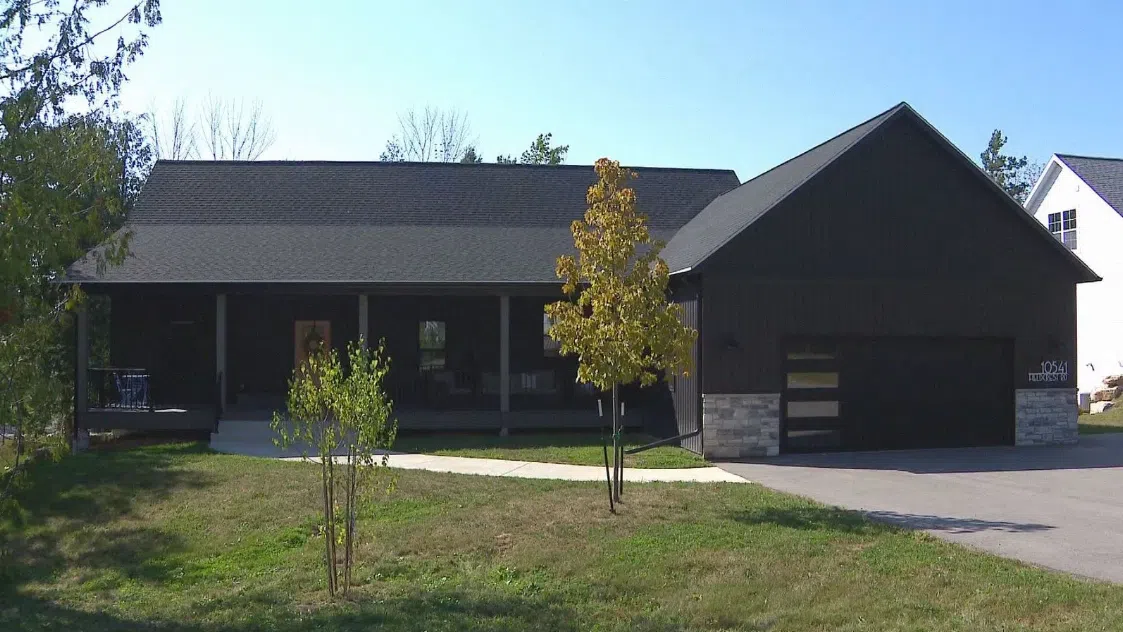
Four Door County property owners have filed a law suit against the Village of Sister Bay after it changed an ordinance limiting the number of bedrooms that can be used in short term rental property. PC: Fox 11 Online
SISTER BAY, WI (WTAQ-WLUK) – A Sister Bay ordinance limiting rental homes to the use of four bedrooms is legal, a judge ruled – rejecting claims by several property owners.
Sister Bay’s regulations only allow rental properties to rent or use four bedrooms. The village altered some of its short-term rental rules last year after months of meetings. According to the ordinance, the changes came following claims of incomplete applications, violations, concerns, and complaints from residents. Four properties owners sued, arguing the ordinance is improper and their sites should have been grandfathered in. They did not challenge the limit of 12-person occupancy.
In the 12-page decision, signed Friday, Judge Jennifer Moeller rejected several of the arguments made by the homeowners, granting summary judgment to the village.
In terms of the state’s “right to rent” law: “This court does not find that to be a common sense reading of the definition of residential dwelling as it applies to short term rentals and the ability to regulate them. The village ordinance does not limit the ability for a homeowner to rent out their entire residence. However, it does limit how many rooms in the residence can be used for bedrooms,” the ruling states.
In terms of zoning regulations: “In this case, the four-bedroom limit is not dividing a geographic area into multiple zones or districts and is not establishing districts or zones for certain uses. The ordinance is not directed at where a use takes place. The four-bedroom limit is a requirement on how the use of short-term rentals may be conducted. Short term rentals have licenses which are granted individually. The four-bedroom limit applies to all short-term rentals. The four-bedroom limit on short-term rentals does not regulate growth and development or encourage the most appropriate use of land,” the ruling states.
In terms of ‘conforming use’ law: “While the homeowners may not agree with the rationale, research, and analysis of the Village’s decision, the Village stated their concerns regarding overcrowding, neighborhood character, parking, noise, strain on local services, and enforcement. The Court agrees with the Village’s conclusion that the limits on using bedrooms for sleeping does not impermissibly regulate the structure. Swansons and Clintons have no right to rent their residences out with five or six bedrooms based on prior nonconforming use,” the ruling states.
In terms of building permits: “These residential property owners have a right to use their homes as short-term rentals and are doing so under licenses required by The Village. The building permit rule does not allow a property owner to be free from any and all rules and regulations forever The court finds that the Building Permit Rule does not allow Wilsons and Froemmings to use all rooms as bedrooms,” the ruling states.
In terms of being an arbitrary regulation: “The court agrees with the Village position that the test is not whether something is arbitrary and unreasonable to specific individuals. In addition, the Village maintains that the four-bedroom limit is not arbitrary and unreasonable. They point to their research, studies, and a thoughtful process that brought them to the four-bedroom limit. The Court does not find the Village’s ordinance to be arbitrary or unreasonable. The Village has stated their public health, safety, and general welfare concerns, even though Plaintiffs and others may disagree,” the ruling states.
The village cannot mandate that the extra bedrooms be locked, however, and the spaces can be used for other purposes, the judge ruled.




Comments