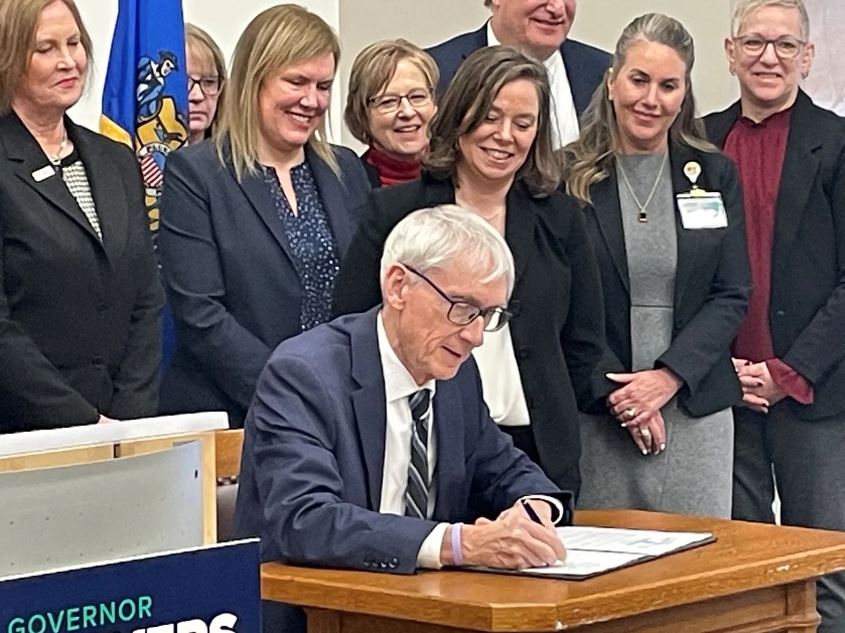
Governor Evers, at Fox Valley Technical College, signs an executive order creating a task force on the healthcare workforce. PC: Fox 11 Online
GRAND CHUTE, WI (WTAQ-WLUK) – While Wisconsin’s unemployment numbers remain low, the state is facing a shortage of healthcare workers. The governor unveiling a plan to try and stop the bleed.
Wisconsin is literally bleeding healthcare workers.
According to Gina Dennik-Champion with the Wisconsin Nurses Association, “Hospitals were beginning, prior to COVID, putting some stuff together but still recruiting and being able to hang on to nurses. I think with COVID we did see nurses volunteer to retire.”
While the state is looking at a potential deficit of 20,000 nurses by 2040, between now and 2030, there will be 32,000 annual openings, across all occupations, in the healthcare industry.
“The numbers paint a concerning picture for the future of one of our most replied upon industries,” said Governor Tony Evers.
That’s why the governor signed an executive order creating a Task Force on the Healthcare Workforce.
The task force will build on programs previously created by the Evers administration, which launched one of the country’s first-ever Registered Nurse apprenticeship pathways to help address the demand for nurses, as well as, the initiative to train over 10,000 certified direct care professionals.
Evers said, “We’ve solved somethings but we have not changed the system itself to make sure that it’s long-standing and it’s going to be something that will last for decades.”
Comprised of state and local government officials, officials with higher education institutions, as well as individuals representing healthcare professionals, and others the task force will be led by Lt. Governor Sara Rodriguez.
It will be focused on finding long-term solutions for the state’s healthcare industry challenges while offering recommendations for the governor to include in his next biennial budget.
According to Rodriguez, “We will focus on ways that we can not only bring more talented workers to our state, but keep them here too. And building on the momentum we have already started, we will seek out new and innovative pathways to get more people started in a successful healthcare career.”
The Wisconsin Nurses Association has already identified five areas where improvements can be made.
That includes things like addressing the nurse’s well-being, addressing the nurse faculty shortage, redesigning nursing care — delivery of care, improving the infrastructure of public health, and retainment and recruitment.
It will be the job of the task force to work together to prioritize those initiatives for the betterment of Wisconsin’s health.
“I think it’s going to be a group that is very committed and very serious about outcomes that the governor can put into place,” added Dennik-Champion.
The governor says there’s about $7 billion in state funding available to help implement recommendations from the task force, once its work is complete.




Comments