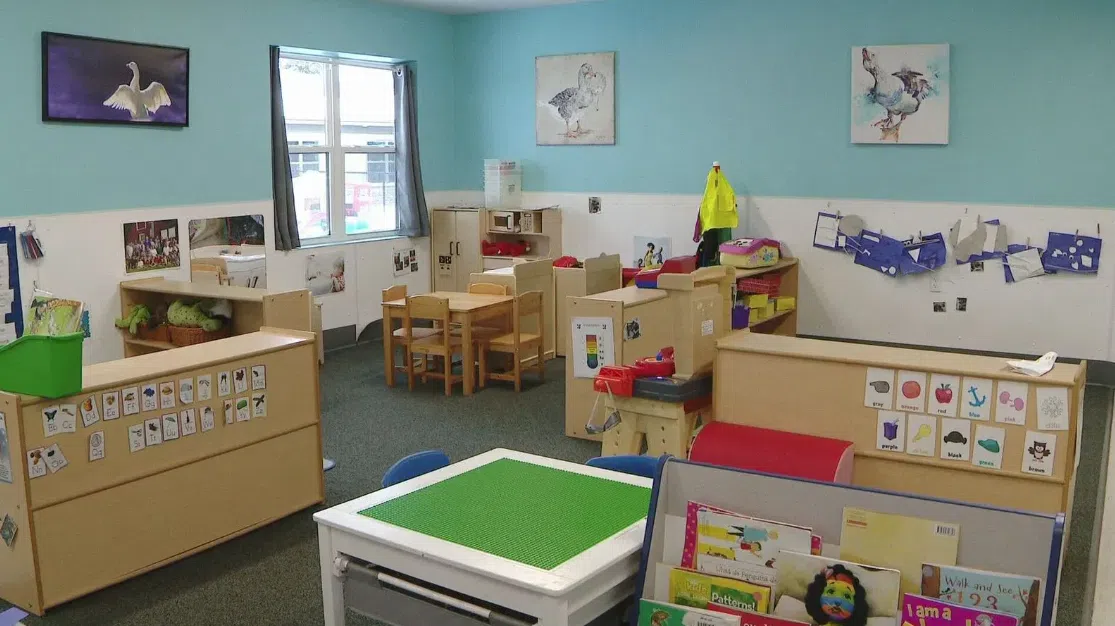
Childcare. PC: Fox 11 Online
APPLETON, WI (WTAQ-WLUK) — Helping solve the child care crisis was the goal of a roundtable discussion in Appleton Monday, as providers across Northeast Wisconsin shared the struggles they’re facing.
Child care workers packed a room at First 5 Fox Valley, shedding light on the many struggles in their industry. The biggest issue discussed was the constantly increasing cost of child care.
“Child care remains one of the highest costs for young families, and folks are looking for help. They’re just trying to make ends meet,” Department of Children and Families Secretary Jeff Pertl said.
Pertl said on average in Wisconsin, child care costs more than $17,000 per child, per year. That’s about 30% of a family’s income. And costs keep rising, mainly due to a lack of staffing and poor wages.
“The cost to run a business is extremely high, between food, teacher wages, insurance — all things that have gone up in the last couple years — and finding and retaining teachers is almost impossible,” Virginia Maus, co-owner of Joyful Beginnings Academy in Outagamie County, said.
Maus said many of their teachers make around $15 an hour, so it’s easy for them to find better paying jobs with benefits elsewhere. That makes it hard to operate a business which requires a certain child-to-teacher ratio.
“We have nine classrooms and about 115 kids. So, in order for a regular run-of-the-mill day to go by, we need over 20 staff members, including someone in the office and a full-time cook,” Maus said.
Maus said in order to keep up, Joyful Beginnings Academy — along with others in the area — have to increase their rates every six months.
The current state budget signed into law over the summer set aside $330 million for child care. $110 million went to a program to help centers maintain staffing and lower rates, but that money is starting to dry up.
“We need to stabilize the industry so that we can break the cycle of, ‘There aren’t enough staff, the price is too high and people can’t find it,'” Pertl said.
Pertl hopes roundtable discussions like Monday’s, and more funding in the state budget, will eventually lead to a more sustainable child care system.




Comments