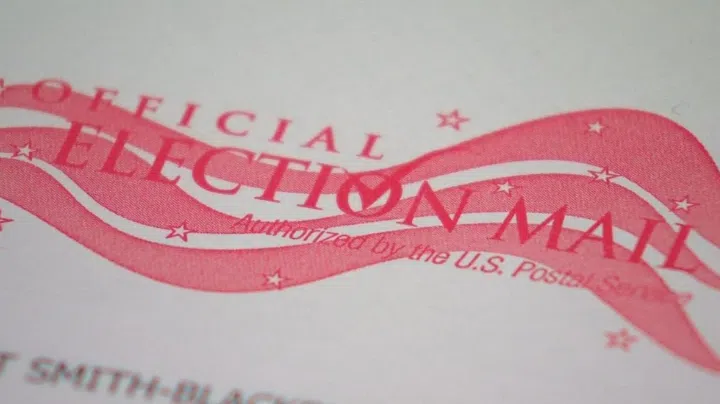
Absentee ballots are ready to be sent to Wisconsin voters. PC: Fox 11 Online
MADISON, WI (WTAQ-WLUK) — Wisconsin is one of nearly two dozen states suing President Donald Trump in a challenge to an executive order they claim interferes with states’ constitutional authority to administer elections.
On Tuesday, Trump signed an order to create national lists of eligible voters and direct the U.S. Postal Service to refuse to transmit mail ballots from any individual whose name is not listed. Wisconsin Attorney General Josh Kaul, along with 22 other attorneys general and one governor, filed a lawsuit, saying Trump’s executive order restricts voter eligibility and mail-in voting to lists of voters pre-authorized by the federal government.
“An executive order isn’t a royal decree,” said Kaul in a news release. “The President can’t unilaterally dictate how states should run elections.”
Trump warned states and election officials could face criminal prosecution and/or a loss of federal funding if they do not comply with his executive order. He said the measure would help improve election security and prevent voter fraud.
Kaul and the co-filers argue Trump’s order “would require states to act contrary to their own voter roll procedures, vote-by-mail systems and voter registration laws.”
State and federal law entitle all eligible voters to cast ballots and have their votes counted in state and federal elections. The states filing this lawsuit permit registered voters to vote by mail if they meet their state’s requirements for doing so.
The U.S. Constitution gives states the primary authority to administer elections. In contrast, the Constitution does not allow the President to unilaterally impose changes to federal election procedures, particularly without an act of Congress permitting him to do so.
The lawsuit alleges Trump’s executive order violates the separation of powers and unlawfully interferes with states’ mail-in voting programs.
Joining Kaul in filing the lawsuit are the attorneys general of Arizona, California, Colorado, Connecticut, Delaware, the District of Columbia, Illinois, Maine, Maryland, Massachusetts, Michigan, Minnesota, Nevada, New Jersey, New Mexico, New York, North Carolina, Oregon, Rhode Island, Vermont, Virginia and Washington and the governor of Pennsylvania.



Comments