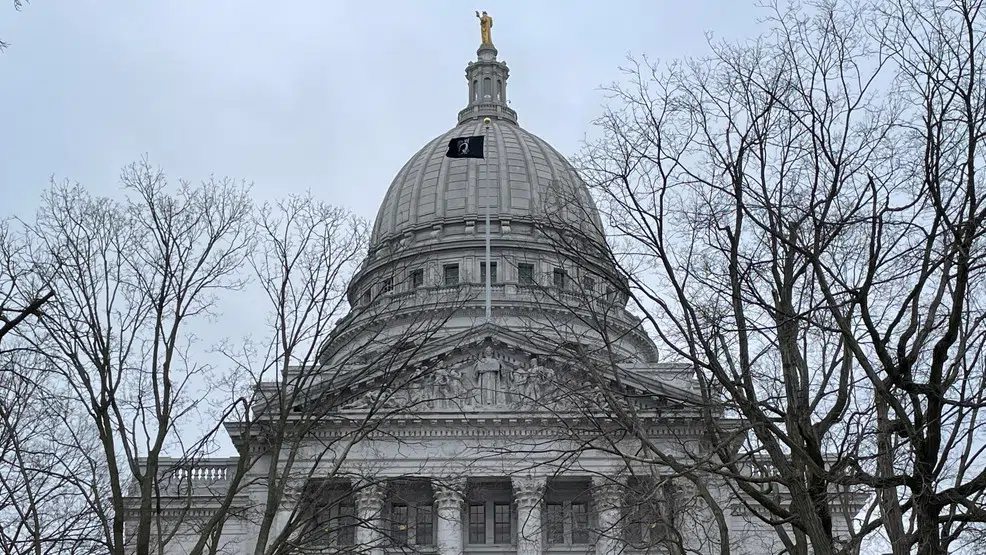
The exterior dome of the Wisconsin state Capitol is seen in Madison Feb. 15, 2023. PC: Fox 11 Online
(WTAQ-WLUK) — Governor Tony Evers signed two bills into law last week that criminalize grooming and require school districts to adopt new policies on appropriate communication.
According to Wisconsin Act 88, grooming is defined as “the deliberate process of building trust with a young person to manipulate, exploit or abuse them.”
Jamie Craig, the program manager for the Family Services Sexual Assault Center, says grooming is something the agency deals with frequently in our community.
“I would say that we’re seeing it weekly, if not daily,” Craig said.
She said grooming can present in many ways, and there are many indicators of abuse.
“Hyper-focused on one child in the family, versus a family of three kids. Only one is getting gifts, or one is getting special attention, one-on-one time. Things like that are indicators,” Craig explained as just one example.
“They can also start with gradually breaking boundaries or rules that the parents or the family might have, or testing the boundaries of the limits of the child or teen themselves by physically touching them in ways that feel uncomfortable for the youth. But the groomer is looking to see what the reaction of the teen or the youth is to determine how far they can go with the abuse,” she said.
Last Friday, Evers signed Wisconsin Act 88 and Wisconsin Act 89 into law. This legislation criminalizes grooming and requires school districts to adopt policies about appropriate communication, as well as to provide new yearly trainings.
Craig said Act 88 is needed.
“I think it’s been a long time coming, because we have identified grooming as a precursor to different forms of abuse, and specifically, sexual abuse,” she said. “So, if we’re able to identify early on when a child or a youth is reporting that they’re being groomed, or they’re giving the descriptions that fit the grooming definition, and shows that they have been targeted potentially this way, we’re preventing, hopefully, children from being abused, because they’re reporting earlier and we’re able to hold those offenders accountable and help educate the community about what grooming looks like.”
Wisconsin State Rep. Amanda Nedweski, R-Pleasant Prairie, who authored Act 88, released a statement after three former students of the Oconto Falls Public School District filed a federal lawsuit against the district Wednesday, alleging the district failed to act to prevent sexually predatory actions by staff members and allowed sexual misconduct to go on for at least the past 15 years.
The heartbreaking allegations in this lawsuit underscore exactly why Wisconsin Act 88, and the other grooming-related bills passed by the legislature this session, are so critical to protecting students and deterring abuse.
Nedweski went on to say:
While Wisconsin Act 88 criminalizes grooming and adds it to the state’s mandatory reporting requirements, Wisconsin Act 89 requires school districts to conduct annual training for school staff to identify grooming and boundary-crossing behaviors. As a mother, it’s horrifying that we are even at a point where this needs to be explained to the adults charged with educating our children — but allegations like those described in the Oconto Falls lawsuit demonstrate why these safeguards are necessary.
While speaking generally, Craig said the law necessitating districts adopt preventative policies, as required by the newly-signed Wisconsin Act 89, is critical.
“It’s not on the youth to protect themselves,” she said.
We need to have adults protecting our children in the community. That looks like educating them about what grooming looks like, healthy communication, safety precautions. Not meeting with a child one-on-one behind closed doors, having group texts versus one-on-one messages, things like that. We want to limit that access or that level of risk that could be there.
Craig said anyone looking for support for their child should contact the Sexual Assault Center’s 24/7 hotline at (920) 436-8899. The hotline is free and confidential and provides local support for victims of sexual violence and their loved ones.
For additional resources, parents can visit Willow Tree Child Advocacy Center’s site for a list of prevention education resources. Additional helpful resources to support ongoing conversations with youth about safety issues related to grooming and preventing abuse include Fight Child Abuse and Amaze.




Comments