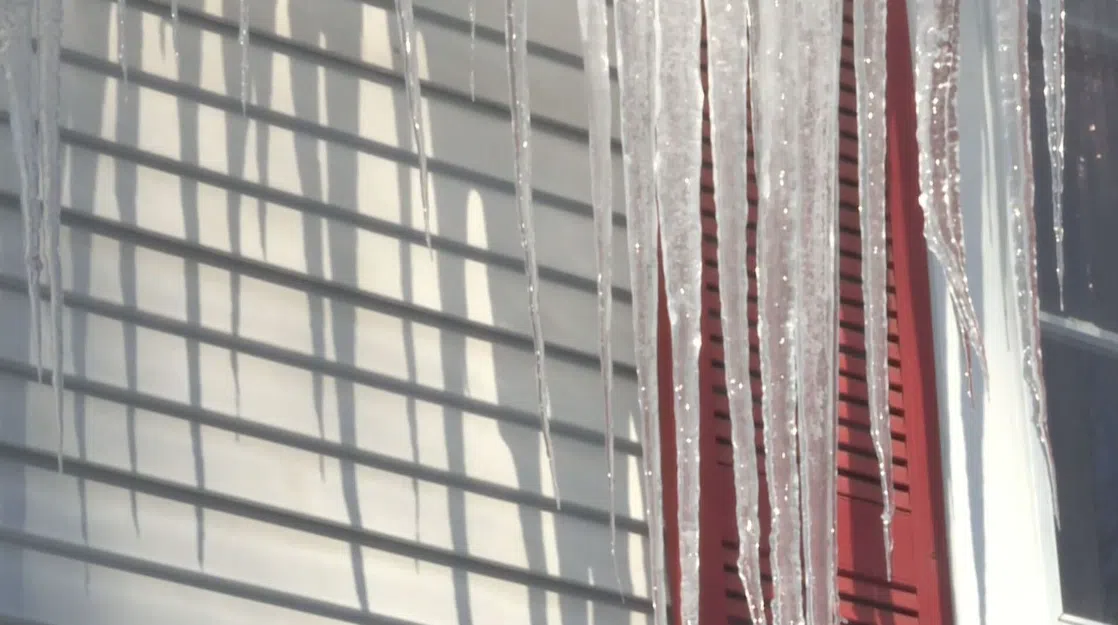
Ice dams form when snow melts on the roof and refreezes at the edges, creating a barrier that prevents proper drainage. PC: Fox 11 Online
(WTAQ-WLUK) — As winter sets in, homeowners may notice more icicles forming on their rooftops. While they may appear picturesque, these icicles could indicate a costly issue: ice dams.
Joe Palumbo, head of Ice Dam Guys, said, “Literally any amount of snow on the roof that can melt can cause an ice dam.”
Many people assume icicles are a normal winter occurrence, but large icicles may suggest a more significant problem. Palumbo explained, “Just because you have an icicle doesn’t necessarily mean you have an ice dam big enough to cause a problem. But the icicles are a byproduct of an ice dam. The bigger the icicles, the bigger the root, the bigger the ice dam.”
Ice dams form when snow melts on the roof and refreezes at the edges, creating a barrier that prevents proper drainage. Palumbo said, “Because shingles aren’t designed to hold water, they’re designed to shed water. The water ends up getting into your house. It leaks through the shingles, through the tar paper, through the roof deck, and into your house.”
This can lead to water damage, mold, and even structural issues. Homeowners should be vigilant for warning signs. Palumbo advised, “If you have icicles that most icicles come off the edge of your roof, if those icicles work their way back under the soffit towards the exterior wall, you know you have an ice dam. That water is leaching through the shingles, it just hasn’t gotten into your house yet.”
He added, “Little icicles growing on your siding. That’s the last warning sign you’ll see before it actually enters your house.”
To prevent ice dams, Palumbo recommended keeping snow off the roof. “Everybody’s looking for a way to avoid hiring the professionals. I don’t blame them. We don’t ever recommend climbing up on your roof and shoveling for obvious reasons, but if you have a roof rake or you can buy a roof rake, just getting as much snow off your roof as possible.”
Proper insulation and ventilation in the home also play a crucial role. While salt is effective for melting ice on driveways, it should not be used on roofs. Palumbo warned, “We are not fans of putting salt on your roof for two reasons. Whatever chemical or product you put on your roof is coming into your house. So if you had water coming into your living space, now you have salty water.”
By clearing snow and ensuring good attic insulation, homeowners can save themselves a few thousand dollars and a headache. If signs of an ice dam are present, it is important to address the issue early.




Comments