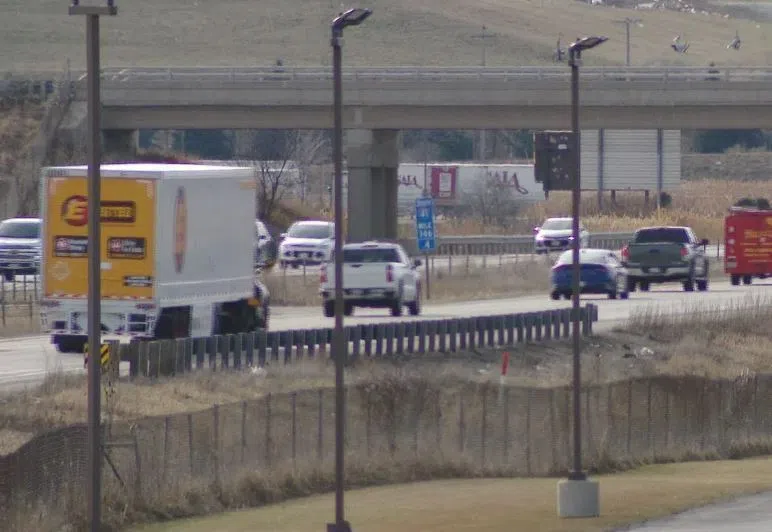
DE PERE, WI (WTAQ-WLUK) – The Wisconsin Department of Transportation is gearing up for a major expansion to Interstate 41.
The project looks to turn a 23-mile stretch from Grand Chute to De Pere from four lanes to six. It will take several years to complete.
The project is slated to begin early next month starting with the Capital Drive overpass. But before then, DOT officials want to give anybody it will affect a chance to learn more about it.
“In terms of what we’re actually going to be building, a lot of that’s already been set through our environmental phase of the project,” I-41 Project Design Lead Scott Ebel said. “We’re still definitely looking to get input from the public, especially input on things in terms of impacts to areas with traffic.”
In an effort to further communicate details of the project, the DOT hosted a public information meeting Wednesday night. It’s the first of two in-person meetings, with a second one happening in Appleton on Thursday.
“Construction is an inconvenience for everyone. It disrupts people’s regular routes, it disrupts traffic to businesses and things like that,” Ebel said. “So we use different tools to try to identify where do we expect that diverted traffic to go.
For a project that’s expected to last until 2030, some came in with concerns.
“Some of my mom’s land was utilized for the project and it’s just where she lives is off of one of the passes that will be fixed,” Kim Ryan said. “So it’s just nice to know like what’s the timeline.”
However, everyone FOX 11 spoke with following the meeting sees the project as a positive.
“Once it’s done it’s gonna really help with the valley with having the three lanes on each side to decrease- we’ve had a lot of accidents on the highway,” Ryan said.
“I think it’s a good improvement,” Raymond Diederich said. “It’s a long time coming. I think some of the interchanges are gonna make traffic a whole lot safer and a lot better. And then with the extra lane it’s really gonna make it better.”
Still, Ebel says he understands those who may have concerns, and the DOT’s efforts in communication don’t stop here.
“A number of tools to keep in touch with the public,” Ebel said. “One is certainly these virtual and in-person that we hold on a pretty regular basis. We also have specific, location specific.”
The project has an estimated cost of roughly one billion dollars. About 80 percent of that comes from federal funding.
To learn more about the project, click here.




Comments