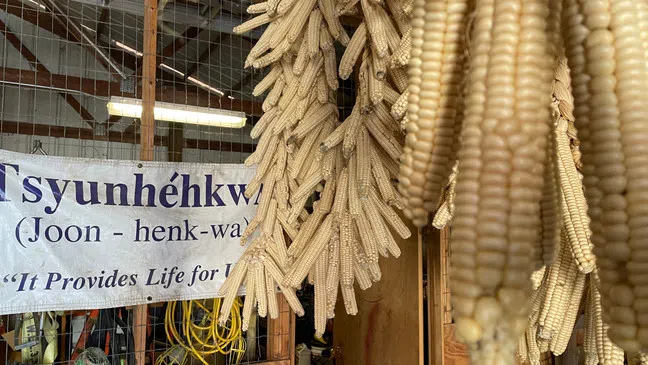
ONEIDA, WI (WTAQ-WLUK) — The Oneida Nation has faced food security and sovereignty issues for generations.
Now, steps are being taken to change the way people think of food.
The Oneida Nation is getting nearly 1 million dollars ($999,920) through the Wisconsin Partnership Program with UW Madison over the next five years.
All of that money is going towards Tsyunhehkwa, the Oneida Nation Agriculture Site.
“Programmatically attack the food security and food sovereignty issue that are on the reservation with a nutritional and health choice,” said Tsyunhehkwa Manager Kyle Wisneski.
Wisneski says the money is focused on systematic change to healthcare. A major part of that healthcare, is food.
Funds aren’t just going toward putting food on tables.
Wisneski says they are focusing on education and how Tsyunhehkwa can give Oneida people the tools to be sustainable and feed themselves.
“We’ve identified elders and young folks as the ones that are in the most need and it’s not that we have a good desert here. We have Green Bay within the reservation borders, so we can put any kind of food that we want on the table,” said Wisneski.
But Wisneski wants to provide traditional foods like white corn, something people can rarely find at the pantry.
“These aren’t just statistical numbers that we see. These really are people who have faces, they’re our aunties, they’re our uncles, they’re our grandmas,” said Vanessa Miller, Food and Agriculture area manager for the Oneida Nation.
Miller says the tribe has many members fighting with health issues.
She says research shows that enhancing cultural identity has positive impacts on your individual sense of self and overall health. Something that a change in Oneida’s food choices can prove.
The Oneida Nation tribal contribution (TC) pays for Tsyunhehkwa right now.
But the next goal is to have funding through Indian Health Services or self governance to cover the farm’s effort towards food sovereignty for every member of the tribe.
The grant money will also help create two more jobs at the agricultural site.
Oneida hopes its initiative will be successful and to help tribes around the nation change the way they use food.




Comments