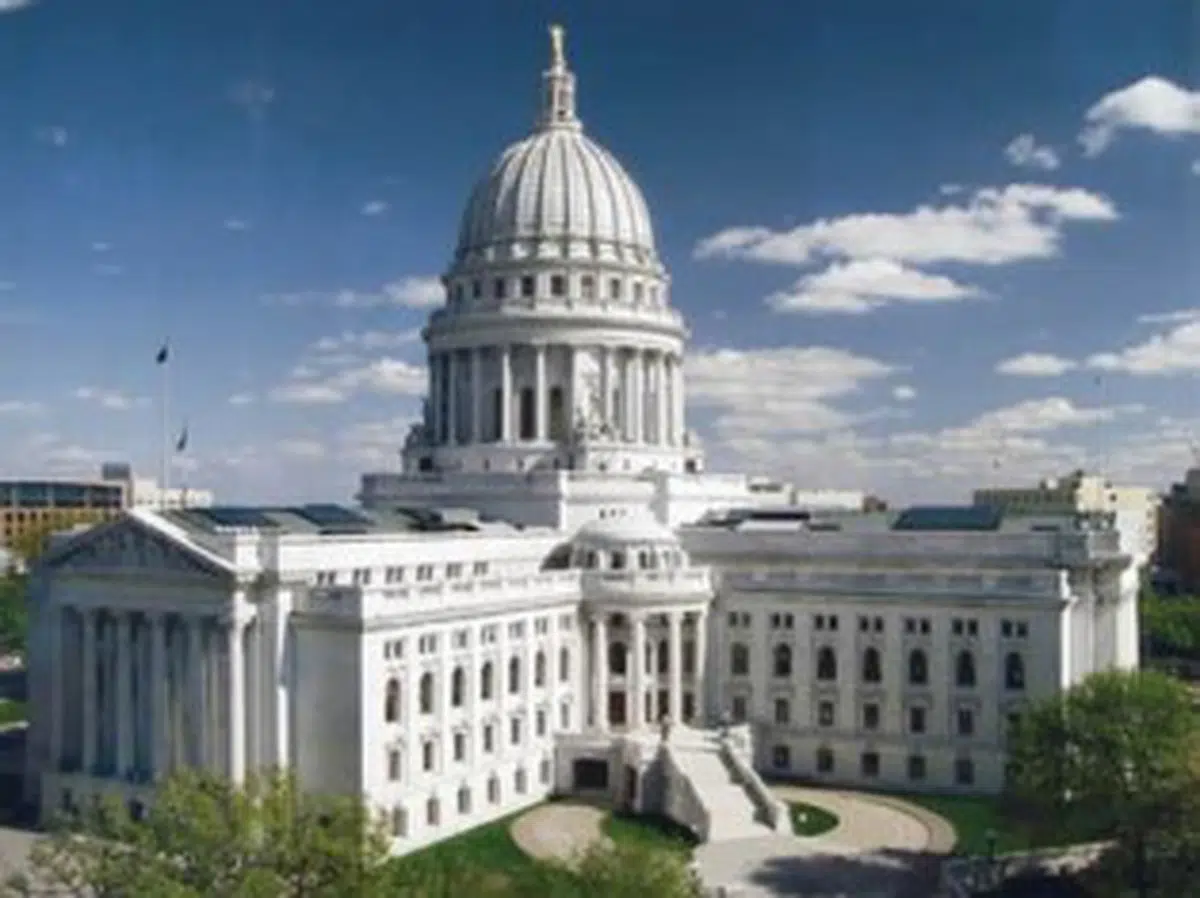
MADISON, WI (WTAQ-WLUK) — Lawmakers advanced several bills on the final session day for the Wisconsin Assembly Thursday night.
Five measures directly impacted Northeast Wisconsin.
That includes Gail’s Law, expanding breast cancer screening coverage. The bill passed unanimously.
Here’s a breakdown of where things stand on the final push for some of the bills.
Regulating wake surfing
A bill to regulate wake boat use on Wisconsin lakes passed Thursday on a voice vote.
The powerful engines use special tanks to create large wakes for surfing behind boats. The activity has prompted concerns by some for safety of others on the water, as well as environmental issues, including erosion. Many municipalities have passed their own ordinances, creating a patchwork of regulations around the state.
The bill prohibits wake surfing unless you are at least 200 feet from the shoreline or other people on the water.
Sandhill cranes
During the discussion on wake surfing, Republican State Rep. Robert Brooks introduced an amendment that classified sandhill cranes as “game birds” — allowing for them to be hunted.
Democrats argued the amendment wasn’t relevant to wake surfing, calling it too big of a change.
GOP State Rep. Shae Sortwell disagreed, saying, “You can’t take one piece of environmental policy and think about it in exclusion… It’s important to make sure those nesting areas are protected. It’s important to make sure we don’t have overpopulation of that species.”
State Rep. Alex Joers, a Democrat, countered, “You’re literally tacking on at the last minute something completely different to wake surfing.”
That bill will be sent to the Senate.
A separate measure directly addresses the hunting of sandhill cranes.
Proponents argue cranes cause damage to crops. Approximately 200 agricultural producers in Wisconsin report sandhill crane conflicts each year, totaling more than $1.5 million in losses.
“There’s no reason we cannot provide support to farmers without authorizing a hunt for cranes,” said State Rep. Karen DeSanto.
State Rep. William Penterman pointed to the rich tradition of hunting in Wisconsin.
“All this bill does is establish a regulated hunting season for sandhill cranes. No special, preferential treatment. It’s about balance,” he said.
That bill has also been advanced to the Senate.
Gail’s Law
The Assembly unanimously approved Gail’s Law, which eliminates out-of-pocket expenses for supplemental screenings for women with dense breast tissue.
Dense breast tissue makes tumors harder to detect. Additional screening, like an ultrasound, is needed in order to find cancer. Some women forgo further testing because of the expense.
The bill is named in honor of Gail Zeamer, a Neenah wife and mother who died in 2024.
Postpartum Medicaid
This bill passed almost unanimously, with a 95-1 vote. It allows women above the poverty level to remain on Wisconsin’s Medicaid program for a full year after giving birth, instead of the current period of two months.
PFAS
Assembly Bill 131 is expected to be voted on Friday, according to State Sen. Eric Wimberger and Rep. Jeff Mursau. This legislation creates new PFAS-specific grant programs to help communities get the resources they need to address contamination while providing new protections for victims of pollution.
PFAS, or perfluoroalkyl and polyfluoroalkyl substances, are a group of chemicals that have been around for decades and have now spread into the nation’s air, water and soil. The chemicals resist breaking down, however, which means they stay around in the environment and have a hard time breaking down in the body. There is a wide range of health harms now associated with exposure to certain PFAS, including low birth weight, cancer and liver disease.
Justice for All Act
This bill was adopted. It aims to address the backlog of court cases across Wisconsin by adding 68.5 assistant district attorneys, 18 state public defenders, 35 public defender support staff and five circuit court judge positions over the next biennium.
Officials say the median time it takes for pending cases to go through the system in Wisconsin is 205 days — 63% longer than it took a decade ago.
Online sports betting
This bill also passed the Assembly and will be sent to the Senate. It will allow tribal nations, such as the Oneida or Menomonie, to administer online sports gambling. Consumers can place bets from anywhere around the state — not just while on-site at a casino, as current law permits.
The projected annual state tax revenue would increase by 10-20%, so another $6-12 million on top of the $60 million the state takes each year on gaming.
About two-thirds of the 50 U.S. states allow legal online sports betting. Right now, Wisconsinites have to go to a casino, or to Michigan, Illinois or Iowa, to place sports bets in person or online.
Funding for WisconsinEye
Lawmakers have not yet agreed on a measure to provide funding to keep WisconsinEye, a nonprofit state version of CSPAN, on the air.
Before it went dark in mid-December due to a funding shortfall, WisconsinEye had broadcast every floor session of the state Senate and Assembly since 2007 for free. It also offered live coverage of court hearings, news conferences, legislative committee hearings and other government proceedings.
This story has been updated to clarify that the PFAS bills have not yet come up for vote.




Comments